Behind the Shine — A Day in the LOTTEDS Atelier
Behind the Shine: A Day in the LOTTEDS Atelier
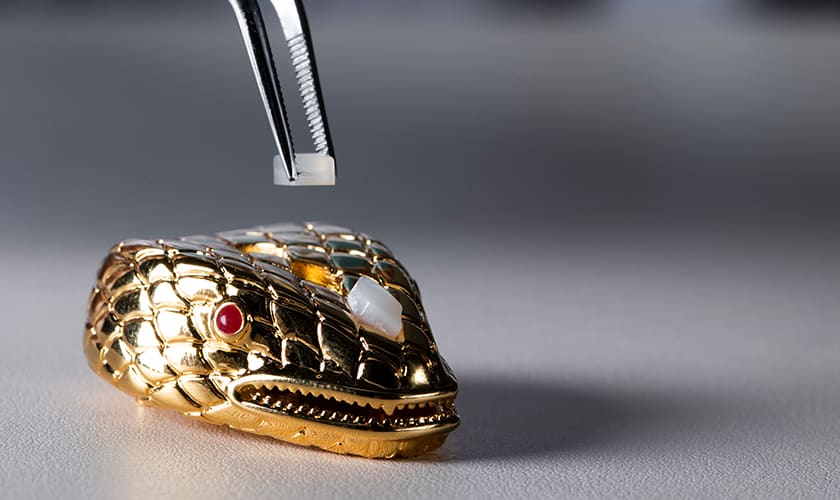
Most jewelry brands show you the finished piece. The polished surface. The perfect lighting. What they don't show you is what happens before — the hands, the decisions, the moments where something is almost right but not quite.
We think those moments matter. Because that's where the quality lives.
7:30 AM — The Skin Test
Before any new design enters production, it goes through what we call the "Livia Protocol." Our founder wears the prototype. Not for an hour. Not for a photo shoot. For days — through workouts, hand-washing, sleep.
If it irritates her skin, it goes back. If it catches on clothing, it goes back. If it feels heavy after a full day, it goes back. The Livia Protocol has killed more designs than any other part of our process — and that's exactly how it should be.
Material Inspection
Every batch of 316L steel is tested for nickel content before it enters the workshop. Every shipment of lab-grown stones is verified for clarity and color consistency. We reject roughly 8% of incoming materials — they go back to the supplier, not into our jewelry.
Precision Casting
The designs — finalized by Bob and the collective — are cast using a lost-wax process adapted for 316L steel. This is more demanding than casting gold or silver because steel has a higher melting point and requires tighter tolerances. One air bubble in the wrong place, and the piece is scrapped.
Hand Finishing
Every piece is hand-polished by artisans who've been doing this for years. The difference between a machine finish and a hand finish is subtle — a slight softness at the edges, a more even reflection, the way light wraps around curves instead of bouncing off sharp angles. You might not notice it consciously. You'd notice if it weren't there.
PVD Chamber
The polished pieces enter the vacuum chamber. Solid 18K gold is vaporized into plasma. The gold embeds itself into the steel at a molecular level. This isn't paint. It's not a dip. It's a permanent bond — the same technology used in luxury Swiss watches. How PVD works in detail →
Stone Setting
Lab-grown diamonds and moissanite are set by hand under magnification. Each stone is checked for secure placement — a loose stone is the most common jewelry failure, and it's almost always due to rushed setting. Our setters work at their own pace. Quality over speed, always.
The Final Inspection
Two independent inspectors examine each piece under 10× magnification. They check for: stone security, surface finish uniformity, clasp function, engraving clarity, and overall aesthetic quality. About 5% of pieces fail this inspection and are either reworked or recycled.
The Livia Check
Random pieces from every batch go to Livia for a final wear test. Not because she doesn't trust the inspectors — but because she made a promise in 2020 that every piece that leaves this workshop must pass the skin test. She intends to keep it.
What Happens to the Pieces That Don't Pass?
They're recycled. 316L steel is 100% recyclable — it gets melted down and reused. Stones are carefully removed and either reset in a new piece or returned to our gem supplier. Nothing goes to landfill. That's not a marketing claim. That's just good manufacturing practice.
Why This Matters
When you hold a LOTTEDS piece, you're holding something that passed through at least seven checkpoints. Multiple pairs of hands. Multiple rejections along the way for other pieces that didn't make it.
We're not the fastest. We're not the cheapest. But we build every piece like it's going to be worn by someone who's been disappointed by jewelry before — and refuses to be disappointed again.
Leave a comment